Industrial drones, also known as Unmanned Aerial Vehicles (UAVs), are rapidly transforming various sectors. These flying machines can access hard-to-reach areas, gather data efficiently, and automate tasks, leading to increased productivity and safety. But with a growing variety of industrial drones available, choosing the right one for the job can be daunting. Let's explore some key types of industrial drones and their applications:
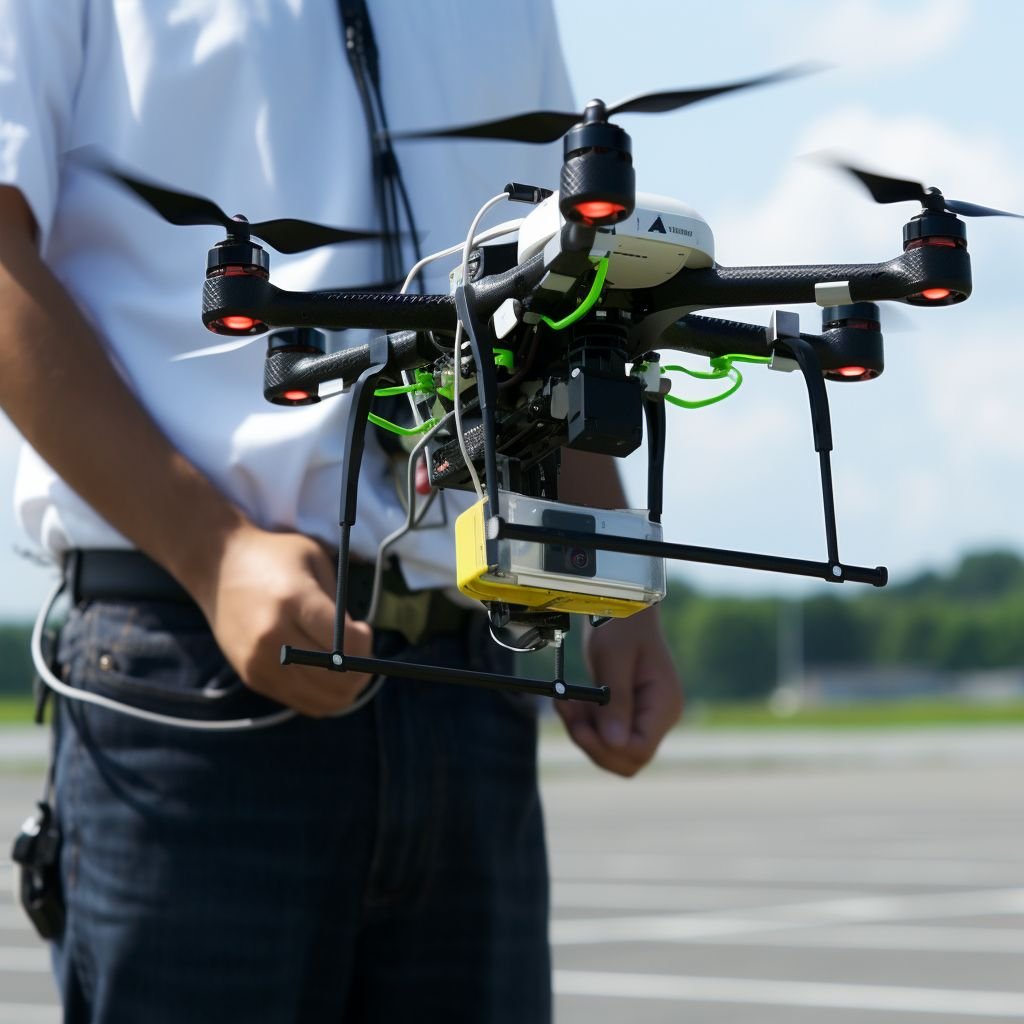
1. Multi-rotor Drones:
- The workhorses of the drone industry, multi-rotor drones, like quadcopters (four rotors) and hexacopters (six rotors), are highly maneuverable and offer excellent stability for hovering and precise movements.
- Applications: These are ideal for tasks like aerial photography and videography for inspections in construction, wind farms, and power lines. They're also well-suited for data collection in agriculture and search-and-rescue operations.
2. Fixed-wing Drones:
- Resembling small airplanes, fixed-wing drones excel in long-range flights and can cover vast areas with extended flight times compared to multi-rotor drones.
- Applications: Fixed-wing drones are perfect for pipeline inspections, mapping large terrains, and delivering critical supplies in remote areas. Their efficient flight patterns make them suitable for agricultural tasks like crop spraying over large fields.
3. Single-rotor Drones:
- While less common, single-rotor drones, similar to traditional helicopters, offer extended flight times and high payload capacities.
- Applications: These are often used for heavy lifting tasks in construction, such as transporting materials, and for firefighting, where they can carry water or fire retardant.
4. Hybrid VTOL (Vertical Take-Off and Landing) Drones:
- Combining the strengths of multi-rotor and fixed-wing designs, these innovative drones offer vertical takeoff and landing like multi-rotors, along with the efficient long-range flight capabilities of fixed-wing aircraft.
- Applications: Hybrid VTOL drones are still under development but hold promise for applications requiring long-range flights with the ability to handle confined takeoff and landing zones, such as inspecting bridges or offshore wind farms.
Choosing the Right Drone
The ideal industrial drone depends on the specific needs of the job. Consider factors like:
- Flight Time: How long does the drone need to stay airborne to complete the task?
- Payload Capacity: What weight does the drone need to carry (cameras, sensors, equipment)?
- Operating Range: How far will the drone need to fly from the operator?
- Maneuverability: Does the job require precise hovering or fast, long-distance travel?
The Future of Industrial Drones
The industrial drone industry is constantly evolving, with advancements in battery technology, flight control systems, and sensor integration. We can expect to see even more specialized drones emerge, tailored for specific tasks and industries. As regulations and air traffic management systems adapt, industrial drones are poised to play an increasingly vital role in shaping the future of various sectors.