Why not just use consumer TV as digital signage?

Digital signage has become a popular way for businesses to communicate with their customers. It allows for dynamic, eye-catching displays that can convey information, promote products, and create a unique atmosphere. However, some businesses may be tempted to save money by using consumer-grade TVs instead of specialized digital signage displays. In this article, we'll explore why this may not be the best idea.

First and foremost, consumer TVs are not designed for the rigors of continuous use. They are meant to be turned on and off as needed, not to run 24/7. Over time, this can lead to burn-in and other issues that can negatively impact the display quality. Digital signage displays, on the other hand, are built to withstand constant use and have features like automatic brightness adjustment to help prolong their lifespan.

Another issue with using consumer TVs for digital signage is that they may not have the necessary connectivity options. Digital signage displays often have multiple inputs and outputs, allowing for easy integration with other hardware and software. Consumer TVs may only have a limited number of inputs, which could make it difficult to connect to other devices or integrate with a larger digital signage network.

Finally, digital signage displays are specifically designed to be viewed from a distance. They have features like high brightness and anti-glare coatings that make them visible in a variety of lighting conditions. Consumer TVs may not have these features, which could make them difficult to see in bright environments or from a distance.

In conclusion, while it may be tempting to use consumer TVs as digital signage displays, it's not the best idea. They are not designed for continuous use, may not have the necessary connectivity options, and may not be visible from a distance. Investing in specialized digital signage displays may cost more upfront, but it will provide a better user experience and ultimately save money in the long run.
RELATED ARTICLES

Programmatic DOOH Advertising explained

Programmatic DOOH (Digital Out-of-Home) advertising is an automated method of buying and selling ad space on digital screens placed in public spaces. It combines the power of programmatic advertising with the reach and impact of DOOH to deliver targeted messages to the right audience at the right time. Here’s how programmatic DOOH advertising works: Programmatic […]

Different touch screen technologies

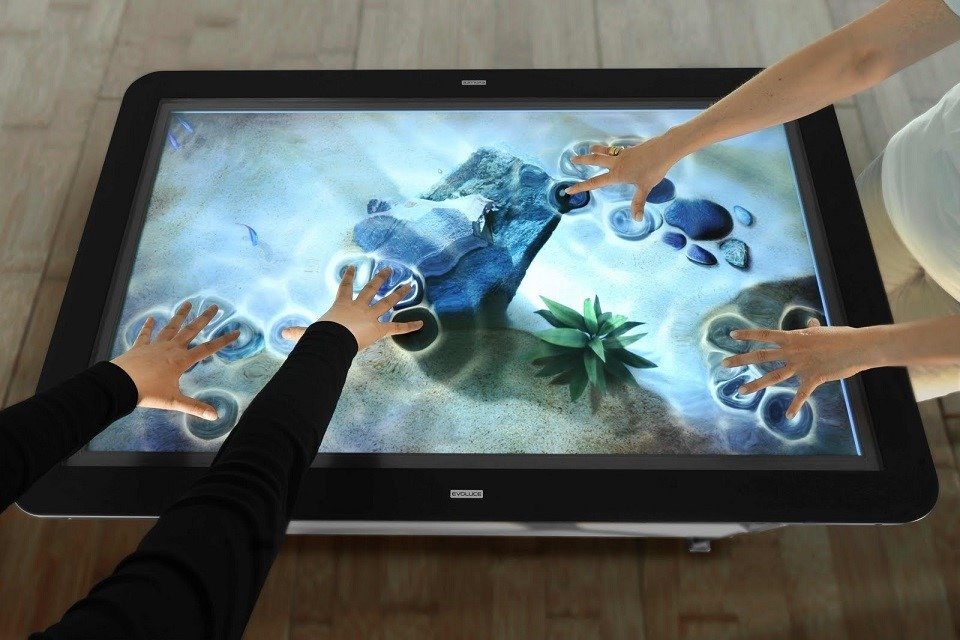
There are several different touch screen technologies commonly used in various devices. Here are explanations of some of the main touch screen technologies: Resistive Touch Screens Resistive touch screens consist of two flexible layers with a small gap between them. When pressure is applied to the screen, the layers make contact, and the touch point […]

What is dvLED?

DVLED stands for Direct View LED, which is a display technology that utilizes a surface array of LEDs (Light-Emitting Diodes) as the display pixels. This innovative approach eliminates the need for an LCD panel and offers several advantages over traditional display technologies like LCDs (Liquid Crystal Displays). DVLED displays provide exceptional contrast, vibrant colors, and […]

What is IVL lighting?

IVL stands for “Induction Vapor Lamp,” which is a type of lighting technology that combines elements of both induction and vapor lamp technologies. IVL lighting is often used for outdoor lighting applications, such as street lighting, parking lots, and large area illumination. IVL lamps operate through a combination of electromagnetic induction and the ionization of […]

How conference system change in the era of WFH

In the era of work-from-home (WFH), the way we conduct conferences has undergone a significant transformation. The traditional model of in-person gatherings has given way to virtual conferencing platforms that enable remote collaboration. With the advent of advanced technologies and the increasing reliance on video conferencing, conference systems have evolved to cater to the unique […]