
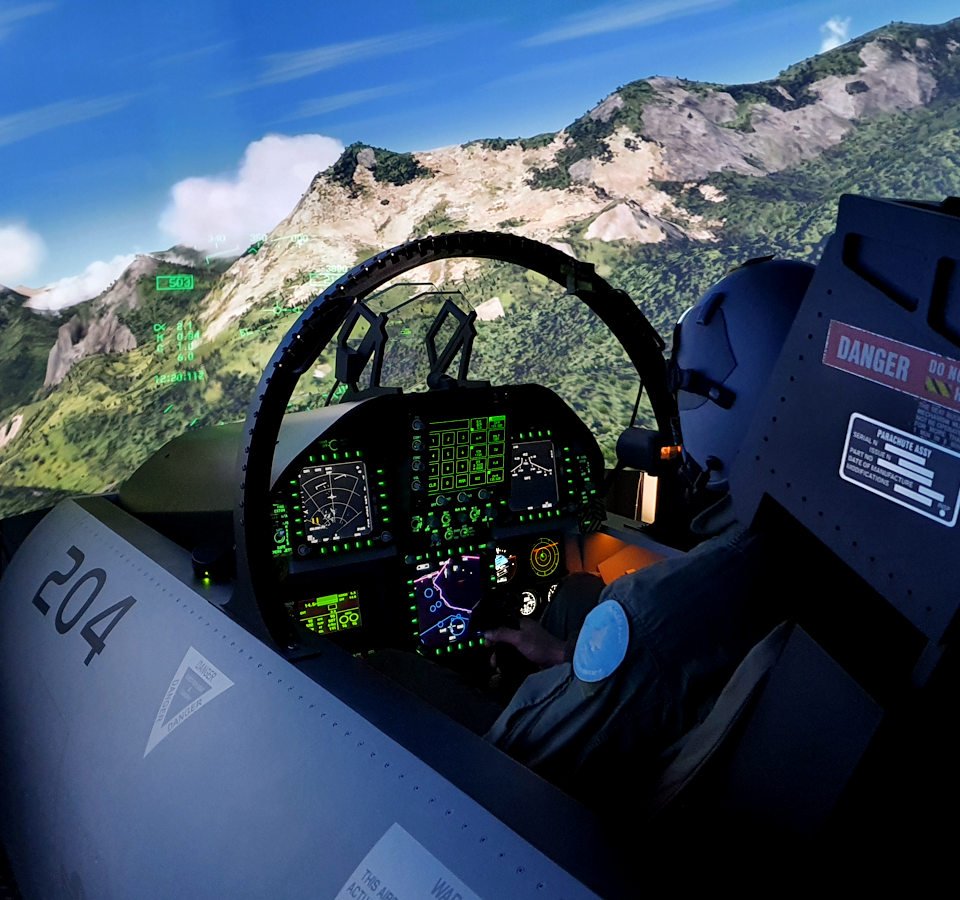
High-stakes tactical flight operations require flawless split-second decision-making, rapid spatial orientation, and intense physical reflexes. Relying solely on live aircraft for advanced combat training incurs astronomical fuel and maintenance costs, accelerates airframe wear, and exposes pilots to extreme physical risk during hazardous maneuver rehearsals. Without a hyper-realistic ground-based environment, defense programs face severe constraints in pilot throughput, mission readiness, and complex tactical exercise execution.
A Professional Military Flight Simulator bridges this operational gap by replicating the exact physical, aerodynamic, and sensory environment of modern fighter aircraft within a controlled, zero-risk setting.
Combat Avionics & Hardware Integration
Designed to deliver uncompromised physical accuracy, a tactical flight simulator merges real aircraft components with high-fidelity computing engines to replicate modern aerial warfare dynamics:
- Replica Tactical Cockpits: Full-scale instrument panels featuring functional hands-on-throttle-and-stick (HOTAS) controls, multi-function displays (MFDs), and ejection seat ergonomics identical to frontline jets.
- Continuous Spherical Visuals: High-brightness laser projection domes paired with high-refresh image generators delivering high-resolution, wide field-of-view visual environments for visual dogfighting and formation flying.
- Dynamic G-Seat & Motion Cueing: Pneumatic pressure bladders, seatbelt tensioners, and multi-axis motion platforms that simulate high-G forces, buffet, and acceleration onset during aggressive maneuvers.
- Tactile & Haptic Control Integration: Precision force-feedback control loading on flight sticks and rudder pedals to mirror dynamic aerodynamic resistance across varied airspeeds and altitudes.
Pilot Mastery & Skill Development
Immersive combat simulation shifts tactical training from abstract theory into deeply ingrained physical muscle memory and tactical intuition.
- Authentic Combat Conditioning: Recreates the intense sensory pressure of weapon delivery, evasive maneuvering, and radar-guided missile engagements in dense threat environments.
- Instant Tactical Debriefing: Records every control input, flight vector, and radar locking sequence for comprehensive post-flight telemetry analysis and mission review.
- Risk-Free Emergency Training: Enables pilots to repeatedly practice catastrophic engine failures, combat damage scenarios, and harsh weather landings that are impossible to rehearse in live airframes.
Operational Deployment Domains
Tactical flight simulation hardware adapts seamlessly across military, defense, and specialized aerospace training environments:
- Defense Flight Training Academies: Serves as the primary platform for undergraduate pilot training, jet transition courses, and advanced tactical fighter weapons schools.
- Research & Aerodynamic Testing Facilities: Provides a safe testbed for evaluating new avionics suites, radar control systems, and experimental flight control software.
- Joint Task Force Simulation Centers: Networks multiple simulators together across secure WAN lines to execute large-force tactical exercises and simulated coalition dogfights.
Strategic Value for Modern Defense Projects
For system integrators and defense project managers, incorporating a tactical flight simulator module creates an essential software-hardware hub for mission readiness. It integrates weapon systems, flight physics, and real-time telemetry into a unified, high-performance training node.
By embedding a professional combat flight simulation module into your project architecture, you provide clients with an indispensable asset that dramatically reduces operational costs, preserves live aircraft hours, and elevates pilot survival rates in complex combat scenarios.