
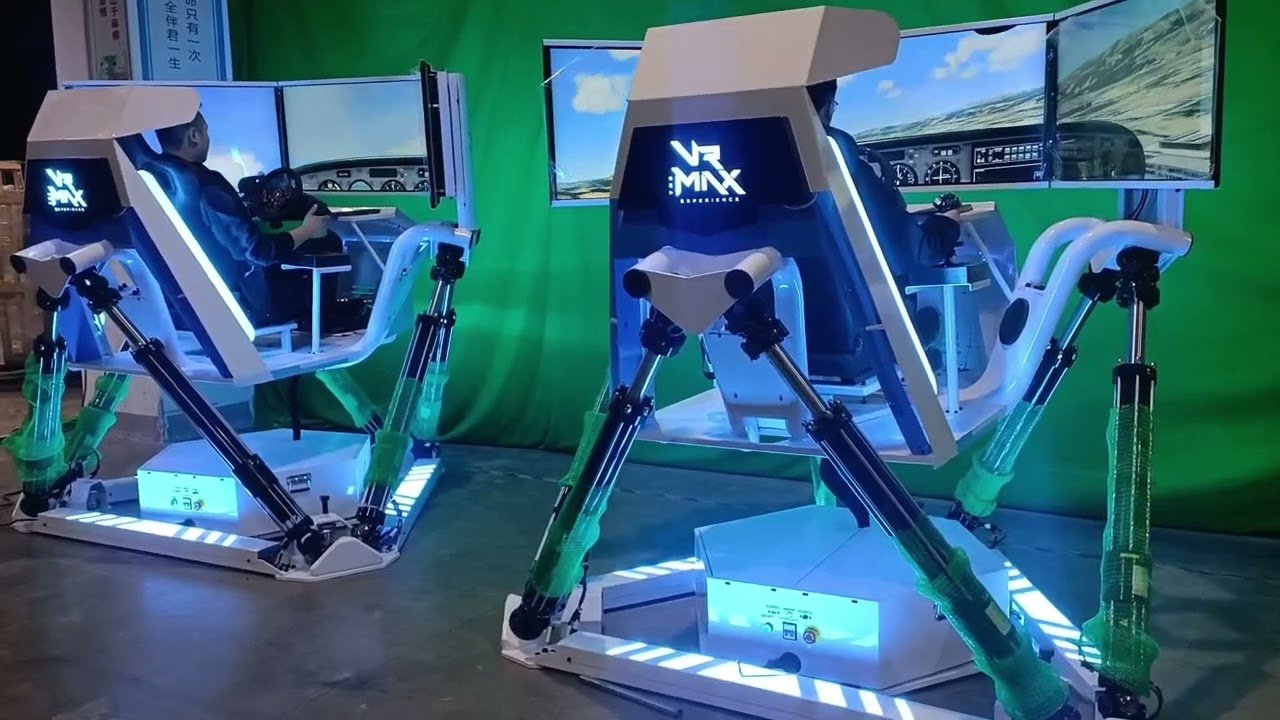
Static visual screens and surround sound can only carry spatial immersion so far. When a simulator asks a user to fly an aircraft, navigate rough terrain, or race at high speeds, the physical body remains static—creating a sensory mismatch between what the eyes see and what the inner ear feels. This disconnect breaks realism and often induces motion sickness during prolonged training or entertainment sessions. Without physical motion feedback, immersive setups fail to build true muscle memory or deliver high-adrenaline experiences.
A Motion Platform System bridges this sensory gap by translating digital physics into precise physical movement, bringing real-world g-forces, vibrations, and spatial dynamics directly to the user.
What Powers the Kinetic Experience
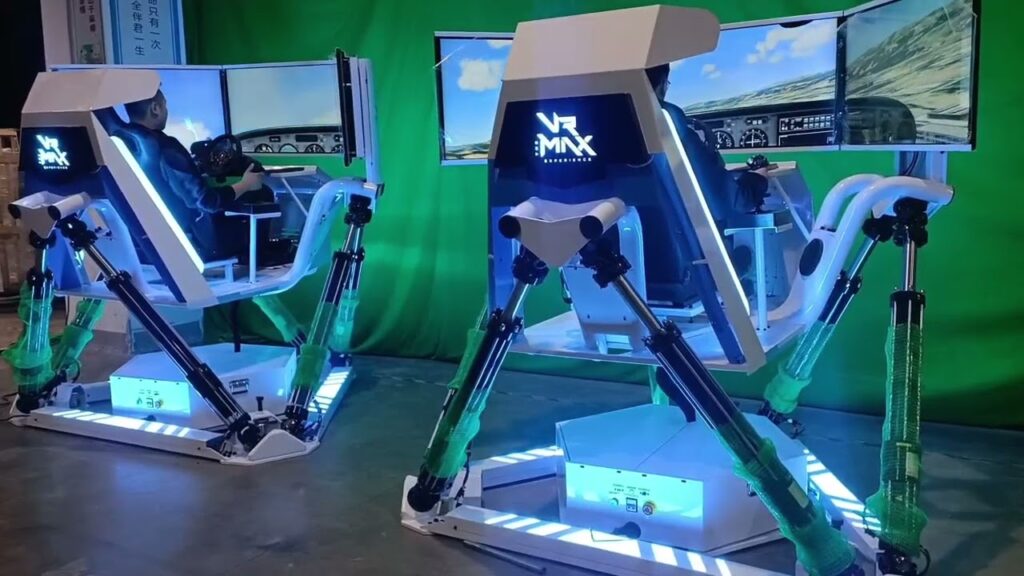
Engineered to replicate real-world physics, a motion platform relies on heavy-duty electromechanical actuators synchronized with physics engines in real time. Built for continuous industrial use, the system transforms simulation data into instant physical response:
- High-Precision Electric Actuators: Fast-acting servo motors and linear actuators offering multiple degrees of freedom (DOF)—from pitch, roll, and heave to full 6-DOF motion.
- Low-Latency Motion Telemetry: Real-time software bridges that extract telemetry directly from flight, racing, or custom physics engines with near-zero latency.
- Dynamic Tactile Transducers: Integrated vibration modules that replicate fine physical cues like engine rumbles, surface textures, and gear shifts.
- Industrial Safety & Control Framework: Emergency cutoff systems, heavy-duty floor mounting setups, and structural safety interlocks designed for high-payload operational stability.
What Your Riders and Trainees Feel
Active kinetic feedback transforms visual simulations into authentic physical environments.
- True-to-Life G-Force Cues: Replicates acceleration, braking deceleration, and cornering forces to trick the brain into sensing sustained motion.
- Reduced Simulator Discomfort: Synchronizes visual movement with vestibular inner-ear perception, dramatically lowering visual-induced motion sickness.
- Visceral Kinetic Immersion: Delivers every bump, tilt, and impact, turning basic screen viewing into an intense, full-body experience.
Where Operations Deploy Them
Dynamic motion setups elevate performance across high-stakes training environments and commercial attractions:
- Commercial Aviation & Tactical Flight Training: Simulates turbulence, stall conditions, and flight maneuvers for pilot certification and emergency response practice.
- Professional Motorsport & Driver Development: Provides race car drivers and automotive engineers with realistic chassis feedback and telemetry testing setups.
- Theme Parks & Location-Based Entertainment: Powers immersive 4D rides, VR motion arenas, and interactive racing bays to maximize guest thrills.
- Heavy Machinery & Defense Simulation: Trains equipment operators and military personnel to navigate hazardous, unstable terrain safely.