
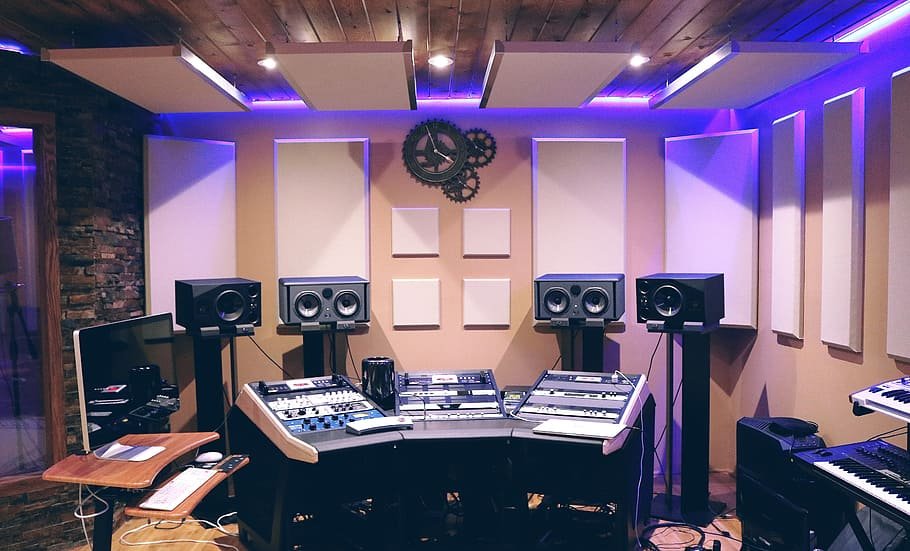
Even the most sophisticated, high-end audio hardware falls short in a acoustically untreated space. Hard surfaces like concrete, glass, and drywall reflect sound waves endlessly, causing flutter echoes, excessive reverberation, and muddy low-frequency buildup. In noisy restaurants, diners struggle to hear each other across the table; in corporate boardrooms, remote participants miss crucial details; and in performance venues, audio clarity vanishes into a wall of noise. Without controlling how sound interacts with the room itself, expensive sound systems fail to deliver clear audio.
A Room Acoustics treatment sub-system solves these sonic flaws by strategically shaping, absorbing, and diffusing sound energy to create clean, intelligible, and comfortable acoustic environments.
Core Materials & Acoustic Control Elements
A comprehensive acoustic treatment setup balances sound absorption, diffusion, and isolation materials tailored specifically to the dimensions and physical makeup of the space:
- High-Sabine Absorption Panels: High-density acoustic panels and fabric-wrapped wall modules engineered to trap mid-to-high frequency reflections and reduce excessive reverberation time ($RT_{60}$).
- Low-Frequency Bass Trapping: Specialized corner and membrane absorbers designed to eliminate low-end room modes and boomy standing waves in small to mid-sized spaces.
- Acoustic Sound Diffusers: Quadratic and 3D mathematical diffusion surfaces that scatter sound reflections evenly across the room without deadening the space or sacrificing natural liveliness.
- Architectural Ceiling Baffles & Clouds: Suspended acoustic elements designed to manage overhead reflections and control sound propagation across high-ceiling commercial footprints.
End-User Experience & Sonic Clarity
Optimizing a room's physical acoustics directly transforms human comfort, focus, and audio perception.
- Crystal-Clear Speech Intelligibility: Eliminates harsh echoes so voices carry naturally, ensuring effortless communication in meeting rooms, lecture halls, and dining areas.
- Reduced Acoustic Fatigue: Lower overall ambient noise levels create a calm, welcoming environment where visitors and staff can spend hours without feeling drained.
- Maximum Audio Equipment ROI: Allows installed sound systems to perform at their highest fidelity by removing physical room distortions and frequency spikes.
Primary Application Scenarios
Acoustic management sub-systems integrate seamlessly across a wide range of commercial, professional, and leisure environments:
- Corporate Boardrooms & Teleconference Suites: Guarantees pristine voice pickup for microphone arrays and hybrid meeting participants.
- Restaurants, Bars & Hospitality Outlets: Maintains an energetic atmosphere while keeping background chatter controlled so guests can converse comfortably.
- Auditoriums, Performing Arts & Recording Spaces: Delivers precise tonal balance and controlled decay times essential for live music, cinema, and studio production.
- Healthcare & Educational Facilities: Reduces stress-inducing noise levels in hospital wards and improves learning comprehension in classrooms.
Strategic Impact for Integrated Facilities
For project developers and spatial designers, treating room acoustics is the essential foundation for any successful audiovisual deployment. It addresses the physical medium—the air and surfaces within the room—ensuring that installed sound systems perform to their full technical potential.
By embedding engineered acoustic solutions into your overall interior build, you deliver spaces that look pristine, sound flawless, and provide superior comfort for every occupant.