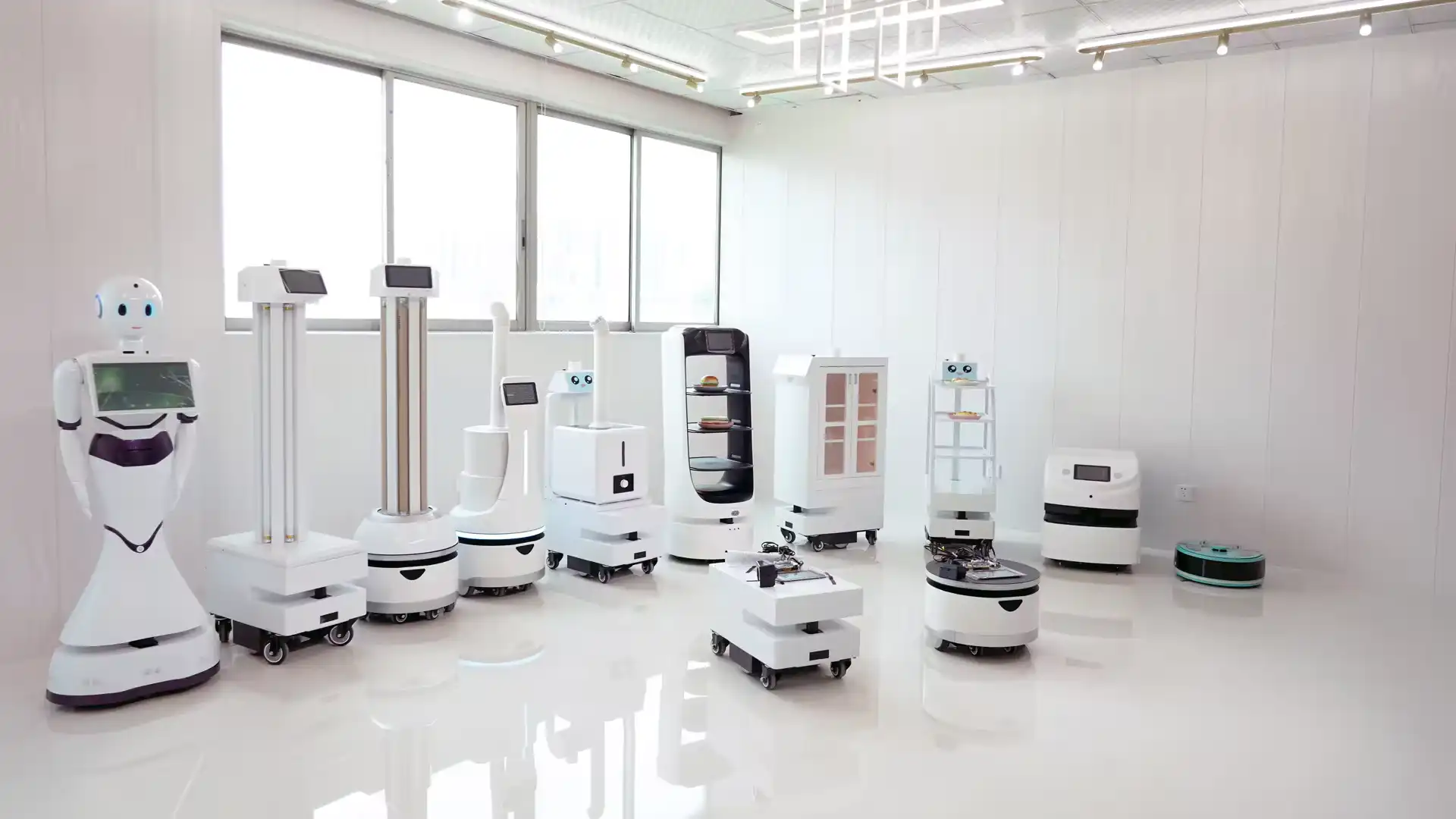
Labor shortages, rising operational costs, and peak-hour bottlenecks create constant pressure across hospitality, retail, and healthcare environments. Human staff are frequently bogged down by repetitive, physical tasks—like bussing dishes, delivering supplies, guiding visitors, or transporting inventory—leaving less time for high-value customer service and care. Without automated assistance on the service floor, operations suffer from slower service speeds, increased staff burnout, and inconsistent guest experiences.
A Self-service Robot solves this efficiency bottleneck by integrating autonomous mobility into daily physical workflows, taking over routine transport and guidance tasks with precision and speed.
Autonomous Navigation & Hardware Intelligence
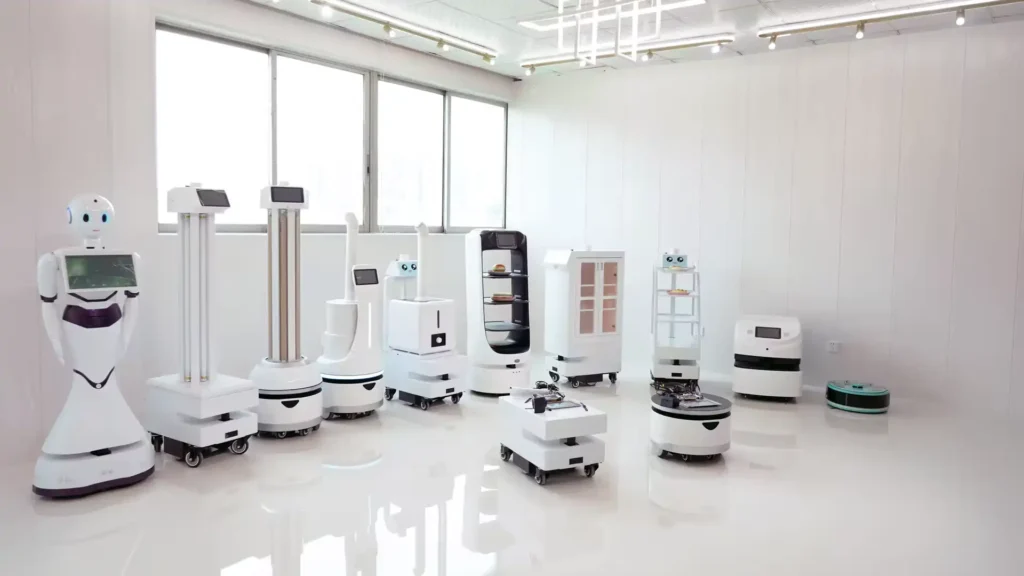
Modern service robots blend advanced spatial awareness with robust physical design to navigate busy, human-centric environments safely. Engineered for continuous daily operation, these units execute complex floor missions autonomously:
- LiDAR & 3D Depth Sensing Matrix: Combines laser radar, optical cameras, and ultrasonic sensors to detect static obstacles, moving crowds, and low-lying hazards in real time.
- Smart Route Optimization Engines: Dynamically calculates the fastest, safest path through dynamic indoor spaces, updating mapping routes instantly when pathways are blocked.
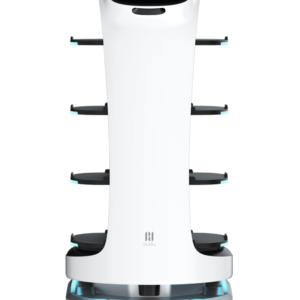
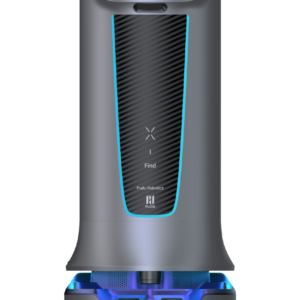
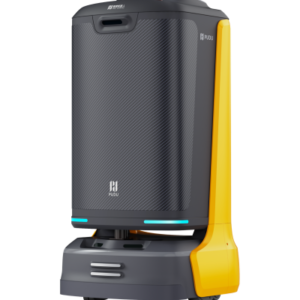
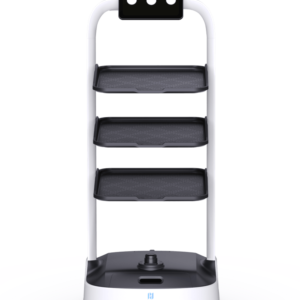
- Multi-Tray & Secure Cargo Compartments: Configurable multi-tier open shelves, temperature-controlled bays, or pin-code locked cabinets tailored for food, parcel, or medical transport.
- Auto-Docking & Fleet Orchestration: Automatically returns to charging stations during downtime and syncs with central fleet management software to distribute tasks efficiently across multiple units.
Interactive Guest & Staff Experience
Deploying autonomous service units changes how physical spaces function, elevating both staff productivity and customer satisfaction.
- Frictionless Task Offloading: Relieves human staff from kilometers of daily walking, allowing them to focus on personalized guest interactions, complex tasks, or patient care.
- Punctual & Predictable Operations: Ensures items, meals, or documents arrive at exact destinations on schedule, eliminating indoor logistics delays.
- Novel Visual & Digital Interaction: Features intuitive touchscreen interfaces, voice prompts, and customizable digital displays that make interaction natural and engaging for visitors.
High-Utility Operational Settings
Autonomous service units integrate smoothly into high-volume indoor facilities requiring frequent physical transport:
- Restaurants & Event Halls: Handles table delivery, dish bussing, and event catering transport to maintain fast table turnover rates.
- Hotels & Residential Towers: Executes room service deliveries, luggage transport, and amenity distribution directly to guest doors without human intervention.
- Hospitals & Medical Centers: Delivers lab samples, pharmaceuticals, linens, and surgical trays between departments securely and hygienically.
- Corporate Hubs & Warehouses: Automates intra-office mail delivery, parcel routing, and light inventory transport across large facility floors.
Transformative Enterprise Impact
For venue developers and operations managers, introducing an autonomous robotic fleet transforms passive indoor corridors into an automated logistics network. It converts routine physical labor into a scalable, predictable digital workflow that runs seamlessly in the background.
By embedding self-service robotics into your overall project plan, you provide clients with a modern operational asset that reduces overhead costs, modernizes floor service, and delivers a futuristic, high-tech experience that sets the facility apart.