
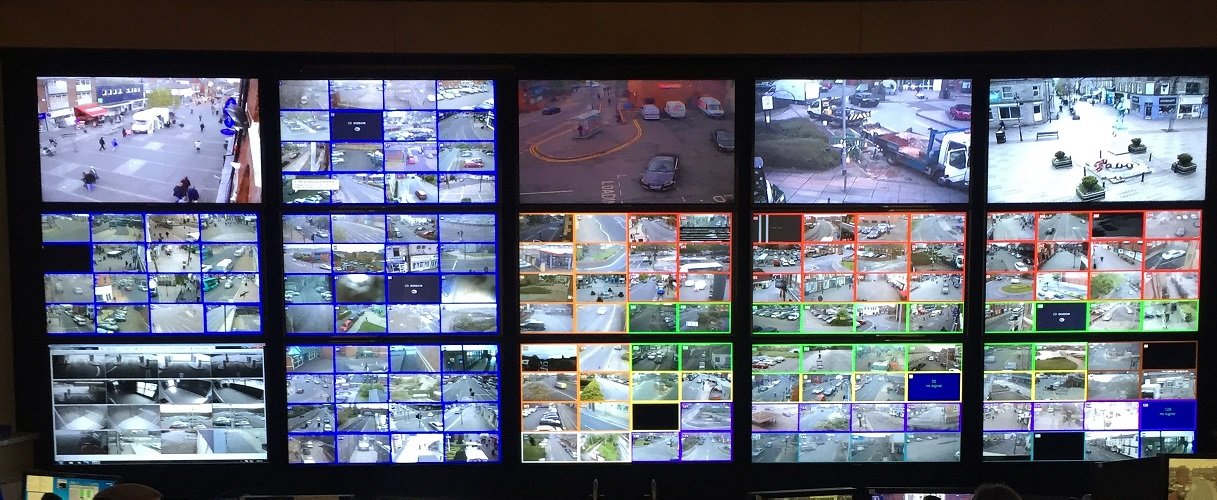
Unmonitored commercial footprints, blind spots, and delayed threat visibility leave properties vulnerable to security breaches, operational losses, and liability claims. Traditional, disconnected camera setups often produce grainy, unorganized footage that only serves as evidence after an incident has already occurred. Without real-time visibility and central oversight, site operators struggle to maintain situational awareness, respond swiftly to active intrusions, or protect assets across expansive facilities.
A Surveillance System resolves these security gaps by converting passive visual monitoring into a proactive, intelligent defense matrix that safeguards assets and streamlines facility operations.
Core Hardware & Optical Technologies
Modern visual security setups pair high-definition optical hardware with edge-based processing and central video management platforms. Built for round-the-clock reliability, the network delivers continuous visual coverage and actionable intelligence:
- High-Resolution Optical Sensors: Pan-Tilt-Zoom (PTZ), multi-sensor panoramic, and dome cameras featuring thermal imaging and low-light sensor technology for crisp, day-and-night clarity.
- Edge AI & Analytics Processing: On-camera algorithms capable of real-time license plate recognition, perimeter line-crossing detection, facial recognition, and object classification (person vs. vehicle).
- High-Capacity NVR & Cloud Storage: Redundant Network Video Recorders (NVRs) paired with encrypted hybrid-cloud storage for tamper-proof recording and rapid footage retrieval.
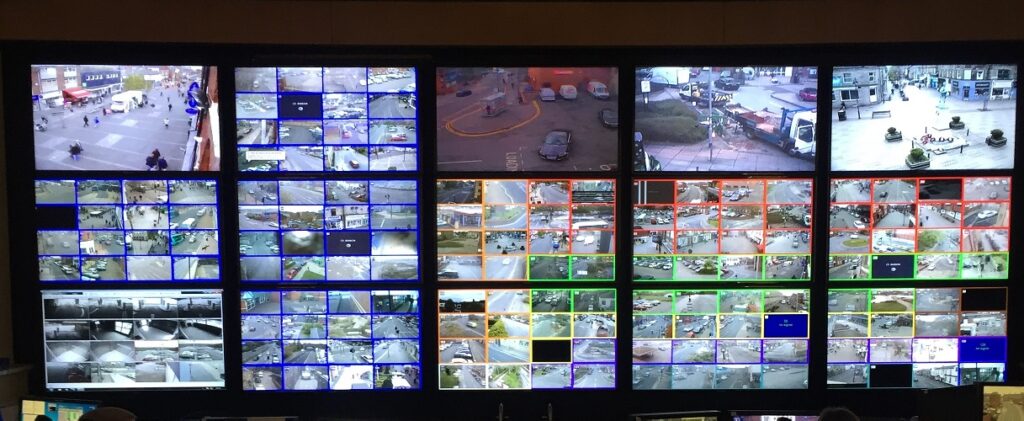
- Integrated Command & Control Interfaces: Centralized video management software (VMS) providing single-pane-of-glass monitoring, mobile alerting, and automated incident mapping.
Operational Safety & Threat Prevention
Intelligent video coverage changes how security teams and site managers oversee physical environments.
- Proactive Threat Deterrence: Identifies unauthorized perimeter breaches in real time, triggering automated strobe lights, audible alarms, or security team dispatches before incidents escalate.
- Rapid Forensic Identification: Accelerates investigative workflows by allowing operators to search hundreds of hours of recorded footage in seconds using smart attribute filters.
- Mitigated Liability Risk: Captures verifiable, time-stamped video records of slip-and-fall incidents, property damage, or workplace disputes to protect against fraudulent claims.
Primary Deployment Scenarios
Advanced camera networks adapt across critical commercial, industrial, and public sector spaces:
- Commercial Real Estate & Corporate Campuses: Monitors lobbies, parking structures, and access corridors to ensure employee safety and control visitor access points.
- Industrial Warehouses & Logistics Hubs: Tracks high-value inventory movement, secures loading docks, and enforces workplace safety protocols across expansive distribution bays.
- Retail Centers & High-Traffic Public Venues: Prevents organized retail theft, monitors crowd density, and streamlines queue management across customer-facing zones.
Spatial ROI & Operational Intelligence
For security integrators and facility directors, an intelligent visual security setup functions as more than an intrusion shield—it serves as an operational sensor network. The system gathers spatial telemetry, dwell-time analytics, and traffic patterns that help optimize property management and resource allocation.
By integrating an AI-driven camera network into your facility framework, you provide stakeholders with an intelligent, future-proof protective layer that mitigates risk, preserves asset value, and ensures total operational control across every corner of the site.