Managing complex visual feeds across multi-screen environments quickly becomes a bottleneck without unified orchestration. When operators must deal with fragmented signal processors, varying display resolutions, and disconnected input sources, content delivery falters—leading to visual tearing, input lag, and catastrophic blackouts during critical moments. Without a centralized hub to route, scale, and manipulate video flows instantaneously, mission-critical venues lose operational clarity and visual authority.
A Video Control System eliminates this operational chaos by serving as the central nervous system for video distribution, seamlessly processing, switching, and rendering multiple high-resolution feeds onto any display topology.
Core Signal Orchestration & Hardware Engine
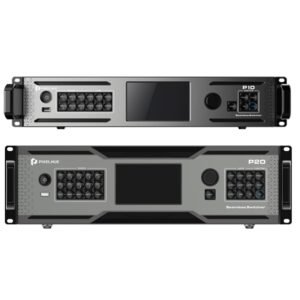
Modern video controllers combine robust hardware switching with ultra-low-latency processing nodes. Engineered for relentless operational environments, the system manages massive bandwidth demands across complex display arrays:
- High-Bandwidth Matrix Processors: Multi-channel video processors supporting 4K/8K real-time routing, seamless signal switching, and custom aspect-ratio scaling across diverse display surfaces.
- Flexible Layering & Canvas Management: Advanced image processing engines capable of picture-in-picture (PiP), multi-window canvas overlays, and arbitrary bezel-compensated screen splitting.
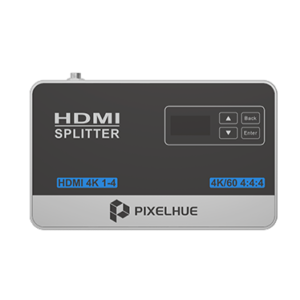
- Universal Input/Output Protocols: Native support for HDMI, DisplayPort, SDI, and IP-based video transport standards (such as NDI or ST 2110) across fiber and copper infrastructure.
- Redundant System Architecture: Dual hot-swappable power supplies and secondary backup processors ensuring zero-downtime performance in high-stakes environments.
Operational Advantages & Operator Control
Centralizing video distribution transforms raw data streams into actionable, high-impact visual layouts.
- Sub-Millisecond Latency & Fluid Transitions: Routes heavy visual data instantaneously without frame drops, screen flicker, or signal delay.
- Intuitive Canvas Layout Switching: Enables operators to swap presets, rearrange live feeds, and push emergency overrides with single-touch simplicity.
- Uncompromised Visual Fidelity: Maintains pixel-perfect color accuracy and native resolution scaling across ultra-large LED walls or multi-monitor arrays.
High-Impact Command & Commercial Environments
Integrated video processing cores power continuous visualization across data-dense and high-traffic sectors:
- Control Rooms & Security Operations Centers: Consolidates hundreds of live CCTV feeds, telemetry charts, and GIS maps onto a unified video wall canvas for real-time situational monitoring.
- Corporate Boardrooms & Executive Experience Hubs: Drives multi-source presentation feeds, video conferencing layers, and corporate dashboards seamlessly.
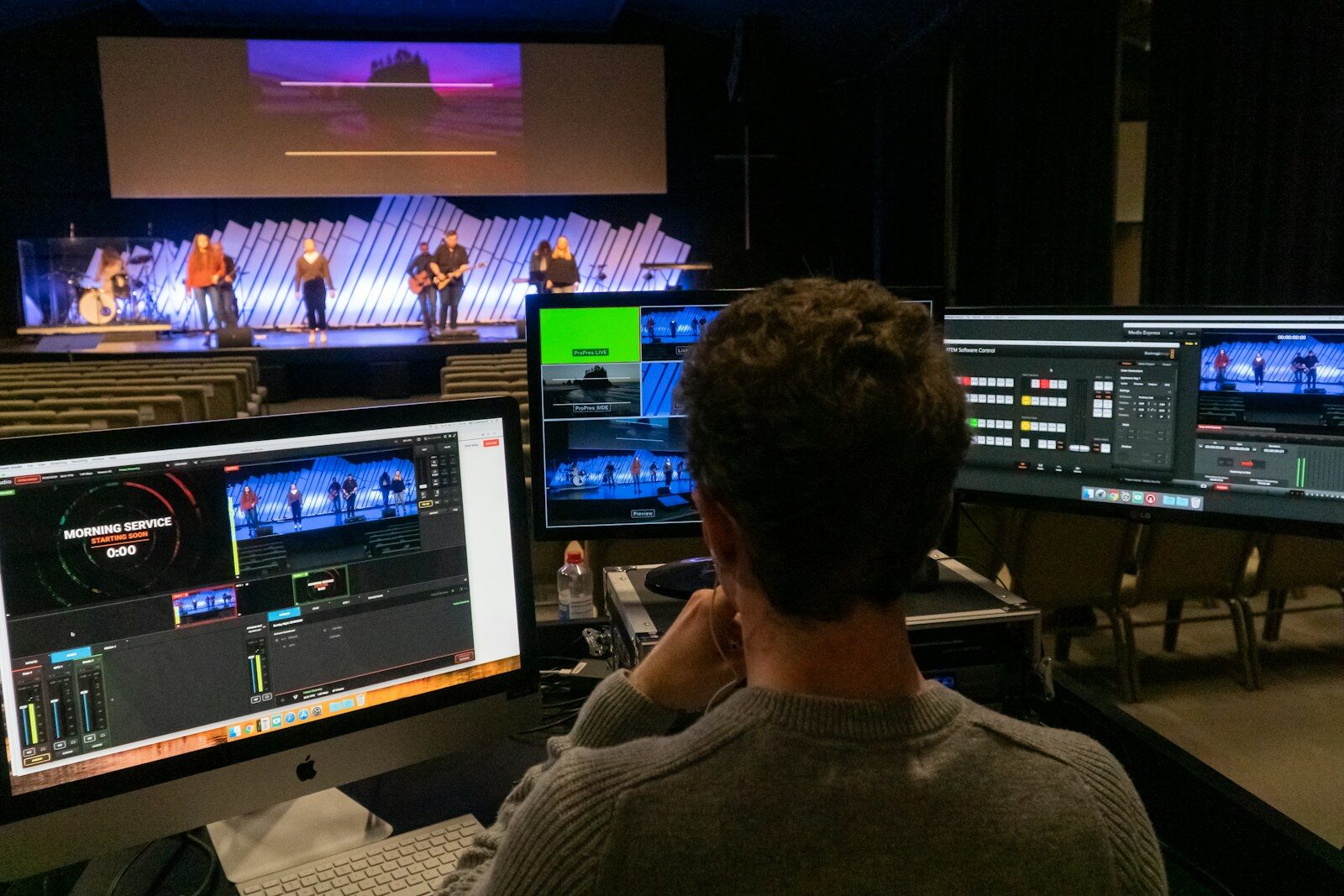
- Broadcast Studios & Event Staging Arena: Manages dynamic background visual walls, live camera feeds, and real-time graphics rendering for live audiences and telecasts.
Strategic Integration Benefits for Enterprise Venues
For system designers and technology architects, embedding a dedicated video processing core ensures long-term infrastructure adaptability. It decouples incoming source hardware from outgoing display technologies, allowing client facilities to expand, upgrade screens, or introduce new media sources without overhauling their underlying cabling matrix.
By integrating a centralized video control engine into your facility roadmap, you provide clients with absolute command over their visual environment—delivering razor-sharp clarity, complete operational reliability, and total control over every pixel in the building.