VR Machines

APPLICATIONS
SERVICES
COVERAGE
PARTNERS
Legacy arcade cabinets and standard flat-screen attractions struggle to captivate audiences raised on modern digital media. Traditional display setups remain bound by two-dimensional boundaries, failing to provide the deep, visceral immersion that today's entertainment seekers demand. Without a physical mechanism that transports players directly into the action, commercial venues miss out on active foot traffic, higher spend per visit, and social media virality.
A VR Arcade Machine bridges this gap by merging industrial-grade motion hardware with spatial computing, turning passive floor space into an active gateway to hyper-realistic virtual worlds.
Core Hardware & Haptic Engine
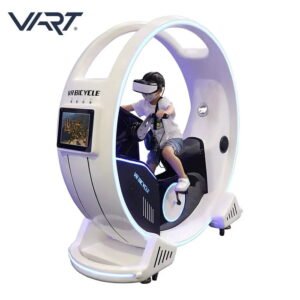
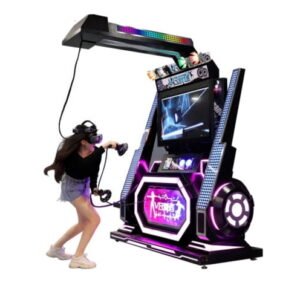
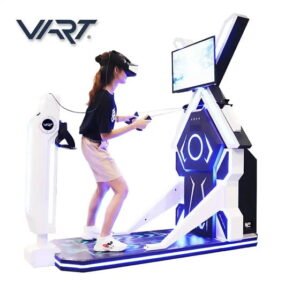
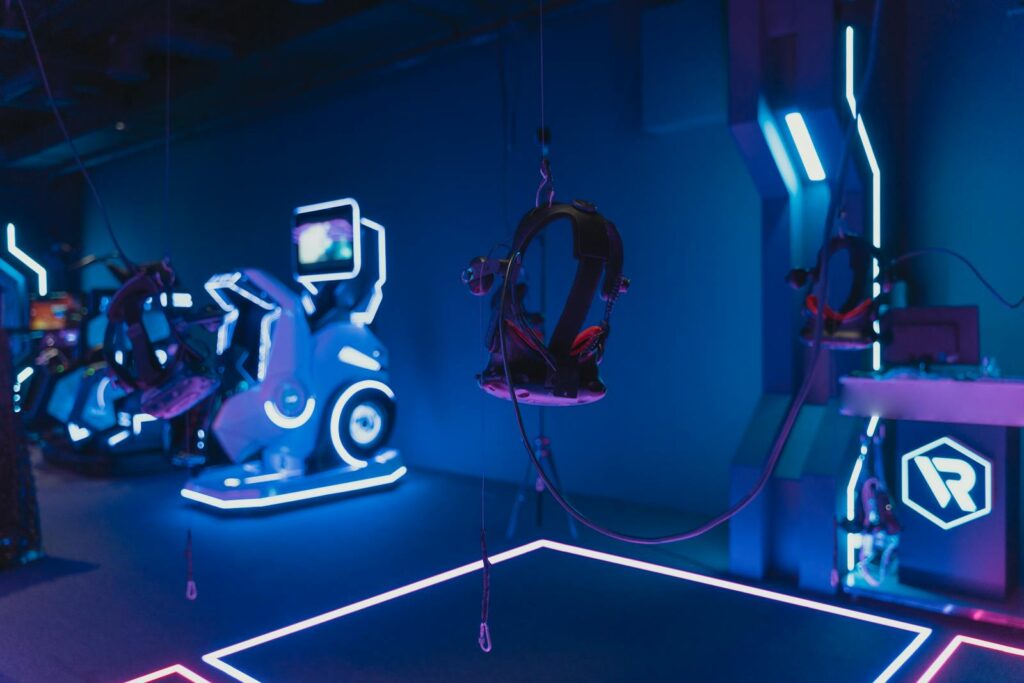
Far beyond consumer headsets, commercial virtual reality machines combine heavy-duty structural frames with multi-axis motion feedback and localized physical controls. Engineered for continuous public operation, these systems sync physical motion to digital environments with sub-millisecond precision:
- Dynamic Motion Platforms: Multi-DOF (Degrees of Freedom) pneumatic or electric actuator bases that tilt, pitch, and roll in real time to replicate acceleration, turbulence, and gravity forces.
- Precision Tracking & Optical Optics: High-refresh commercial VR headsets featuring wide fields of view, anti-fog ventilation, and low-latency positional tracking.
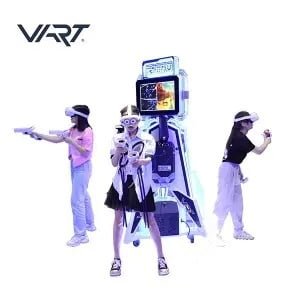
- Integrated Physical Controls: Heavy-duty flight sticks, haptic force-feedback steering wheels, or tactile light-gun peripherals built to withstand high-volume usage.
- Self-Service Payment & Kiosk Nodes: Contactless card readers, QR-code scanners, and integrated attendant stations for frictionless operation and fast turnarounds.
Sensory Impact & Player Immersion
Infusing real-world movement into spatial visuals redefines how visitors experience location-based entertainment.
- Full-Body Spatial Presence: Synchronizes visual movement with inner-ear balance, eliminating motion discomfort while tricking the brain into feeling real physical flight or speed.
- Spontaneous Spectator Appeal: External high-brightness displays show live in-game action, creating crowd curiosity and driving secondary queue lines across the venue floor.
- High-Thrill Accessibility: Delivers extreme sports, roller coaster drops, and intense combat scenarios safely within a compact, controlled physical footprint.
High-Traffic Destination Placements
Commercial-grade spatial gaming setups fit seamlessly across diverse leisure and commercial environments:
- Family Entertainment Centers & VR Parks: Serves as anchor attractions that command premium price-per-play rates alongside traditional redemption equipment.
- Shopping Malls & Retail Concourses: Converts open walkway space into high-margin experiential hubs that draw passing shoppers into active engagement.
- Casinos, Cruise Ships & Resort Lounges: Offers high-tech, turn-key entertainment that extends guest stay duration and boosts overall food and beverage spend.
Strategic Return on Spatial Investment
For venue operators and space planners, incorporating a virtual reality gaming module introduces a compact, high-yield revenue engine. The self-contained footprint allows sites to maximize turnover per square foot without requiring expansive real estate or extensive supervisory staff.
By deploying commercial VR units into your property mix, you provide clients with an eye-catching, high-margin attraction that turns casual foot traffic into repeat visitors, elevates the venue's tech-forward profile, and delivers measurable ROI.
Related Products in this Sub-system 🔽
Entertainment